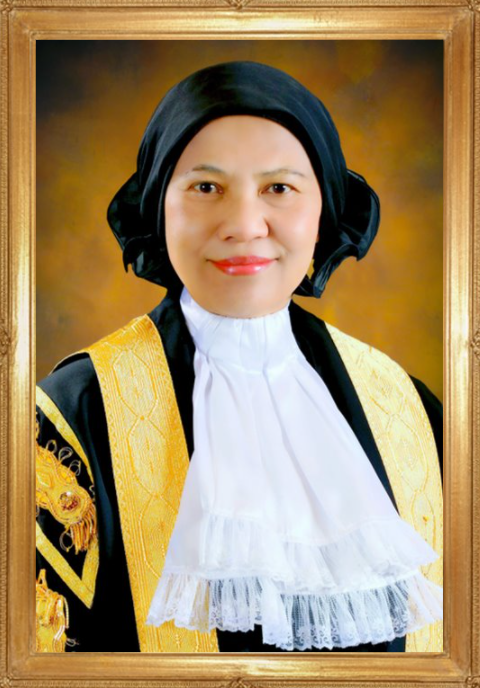
President of the Court of Appeal

The Right Honourable Tan Sri Rohana binti Yusuf

President of the Court of Appeal

PSM, SPSK, DPSK


The Right Honourable Yang Amat Arif Tan Sri Rohana binti Yusuf was born in Bachok, Kelantan on 9th May 1956. Her Ladyship obtained her LLB degree from University of Malaya in 1980, Diploma in Syariah Law and Legal Practice (DSLP) from International Islamic University Malaysia in 1992 and Master of Comparative Laws (MCL) from International Islamic University Malaysia in 1993.


Her Ladyship began her career in the Legal and Judicial Services in 1980 as an Assistant Parliamentary Draftsman at the Drafting Division of the Attorney General’s Chambers, as a Legal Adviser at the Ministry of Defence in 1982 and later in 1986 as a Senior Federal Counsel at the Attorney General’s Chambers. Subsequently, Her Ladyship served as a Sessions Judge Court at Kuala Lumpur. Her Ladyship opted for retirement in Judicial and Legal Services after 18 years in service.


Her Ladyship joined a private sector in 1997 as a Legal Adviser and Company Secretary at Kumpulan UCM Industrial Corporation Berhad and Legal Adviser and Company Secretary at International Bank Malaysia Berhad.


Her Ladyship used to practice as an advocate and solicitor and was a partner of Messrs. GH Tee & Co. in 2000. Before joining the judiciary, Her Ladyship was a Deputy Director of Islamic Banking and Takaful Department, Central Bank of Malaysia from 2001 to 2005.


On 1st September 2005, Her Ladyship was appointed as a Judicial Commissioner of the High Court of Malaya at Kuala Lumpur. On 17th April 2007, Her Ladyship was elevated as a Judge of the High Court of Malaya at Kuala Lumpur.


On 8th January 2013, Her Ladyship was appointed as a Judge of the Court of Appeal. On 27th April 2018, Her Ladyship was appointed as a Judge of the Federal Court.


On 25th November 2019, Her Ladyship was designated by the Right Honourable Chief Justice to exercise the powers and perform the duties of the President of the Court of Appeal and on th 5th of December, Her Ladyship was appointed as the President of the Court of Appeal. On August 17th 2020, Her Ladyship was then conferred with Darjah Panglima Setia Mahkota which brings the tittle 'Tan Sri'.

Her Ladyship is blessed with two children, Nor Alina binti Azmi and Mohamad Rizal bin Azmi.


Address:

  • President of the Court of Appeal
  • Federal Court of Malaysia
  • Level 5,Istana Kehakiman
  • Precint 3
  • 62506 PUTRAJAYA
  • 603 8880 3500

Privacy & Security Policy

Privacy Policy

  • This privacy policy describes the use and protection of information submitted by visitors through the website of the Office of the Registrar General of the Federal Court at www.kehakiman.gov.my.


Data Security

  • All transmissions of personal data will be protected and stored using appropriate security technologies.
     

Information Collected

Procedures In Civil Cases

1. GENERAL INFO

What Is A Civil Claim? 

  • A civil claim is a legal and factual dispute between two or more parties claiming for remedies, damages or compensation.

Filing a Civil Claim

  • A claim by an individual not more than RM5,000.00 can be filed in the Small Claims Court.
  • The Magistrates’ Court will hear all civil claims up to RM100,000.00.
  • The Sessions Court will hear all civil claims between RM100,001.00 to RM1,000,000.00
  • The High Court can hear all monetary claims (unlimited jurisdiction).

Examples of Civil Claim

  • Personal Loan
  • Housing Loan
  • Hire Purchase
  • Study Loan
  • Credit Card
  • Breach of Contract
  • Dispute involving Movable and Immovable Property
  • Dispute between Landlord and Tenant
  • Civil claims involving motor vehicle accidents
  • Personal Injury Claims

2. HOW TO FILE A CLAIM

Before you file a claim in Court you should first consider the following:

  • Cause of action. Is there a proper basis for your claim?
  • Limitation period. Are you within time to file your claim?
  • Evidence. How will you back up your claim? Do you have the necessary evidence in the form of documents or witnesses?
  • Costs of litigation. You will need to incur Court filing fees and litigation may take up a substantial amount of your time. You should also consider the possibility of losing your case and the consequences of that - such as being ordered to pay your opponent’s costs. 

MODE OF COMMENCEMENT

  1. Writ of Summon
    • If your claim involves a substantial dispute as to the facts, then it must be commenced by way of Writ.

      The writ must be endorsed with a Statement of Claim or a concise statement of what your claim or the relief or remedy you seek.
      There must be sufficient information and particulars in the statement for the Defendant to be clear about what it is you are claiming against him/her for.
      State the number of days that the Defendant(s) has to enter an appearance to your Writ.

      CLICK HERE FOR A SAMPLE WRIT

    • 1.1. Service of Writ

      The writ can be served in the following manner:

      Personal Service / by way of Prepaid AR Registered Post addressed to his last known address
      If personal service failed, an application for substituted service shall be filed

    • 1.2.Important Information to be stated on your Writ

      The address of your residence 
      If your address is not in Malaysia, or if you do not have a place of residence in Malaysia, then give an address within Malaysia where documents may be delivered to you at your occupation

  2. Originating Summons
    • i) What is Originating Summons (“OS”)

      OS is to be used when it is required by a statute, a dispute which is concerned with matters of law and where there is unlikely to be any substantial dispute of facts. Hence, OS should not be used if there are dispute of facts.

      CLICK HERE FOR A SAMPLE OF OS

    • ii) Features of OS

       The OS must be filed together with an Affidavit in Support exhibiting documentary evidence intended to be relied on
       It is heard by a Judge
       No pleadings are required.

    • iii) Contents of an OS

      A statement for determination or for direction or a concise statement of the relief or remedy claimed, •Particulars to identify cause or causes of action in respect of which the Plaintiff claims that relief or remedy

    • 2.1 Filing

      Filing can be done at the Court Registry depending on your location. You will then need to extract a sealed copy of the same and serve your Court papers to the Defendant within 6 months.


3. HOW TO DEFEND A CLAIM

  1. Steps to take after you are served with a Writ of Summons
  2. Steps to take after you are served with an Originating Summons
  3. When does the pleading close?

The pleadings (in the case of a Writ action) or exchange of Affidavits (in the case of an OS action) will be closed when the respective parties have filed the following:

For Originating Summons For Writ of Summons 
Plaintiff's Writ Plaintiff's Originating Summons
Plaintiff’s Statement of Claim Plaintiff’s Affidavit in Support15
Defendant’s Statement of Defence Defendant's Affidavit in Opposition
Defendant’s Counterclaim (if any) Plaintiff’s Affidavit in Reply
Plaintiff’s Reply to Defence (if any)  
Plaintiff’s Defence to Counterclaim (if any)  
Defendant’s Reply to Plaintiffs’ Reply to Defence  

1. WHAT DO I DO IN TRIAL

Before a trial begins, you will have to attend pre-trial case management.

On The Hearing Date Pre-Trial Case Management (PTCM)

  • Upon the close of pleadings, the Court will call the parties up for a PTCM.
  • You must compile all your documents and identify your witnesses.
  • At the PTCM, the Court will inquire on the issues, documents and witnesses of the case.
  • The Court will then give direction as to what documents are needed to be filed in Court together with the timelines for all the filings.
  • You must comply with the timelines unless an extension of time is allowed by the Court.
  • Failure to comply with the directions may result on the dismissal of your claim.

On The Hearing Date

  • If you require the court to issue a subpoena to your witnesses, an application should be made earlier to the court.
  • Remind witnesses of the trial date.
  • Arrive at the court complex 15 minutes earlier than the stipulated time. The court will convene at 9:00 am.
  • Dress appropriately. You must comply with the court dress code.
  • Upon arrival, please check your case in the cause list displayed at the court notice board or inform the court interpreter of your attendance.
  • Bring along documents to be used during trial.
  • Speak and conduct yourself in a courteous manner. If you are addressing a Judge in the Sessions Court, you should refer the Judge as "Tuan Hakim" or "Puan Hakim”.  For Magistrates Court, you should refer the Judge as "Tuan Majistret" or "Puan Majistret" or "Your Honour".

Trial Procedure

  • If you are the Plaintiff you will start first. You can call witnesses or testify yourself. You must also produce your documents for you and your witnesses to identify.
  • You and your witnesses can be cross examined by the Defendant.
  • After cross examination, you may re-examine the witness to explain what he or she had said during cross examination. You cannot bring up additional issues that was not raised during the cross examination.
  • After you have called all your witnesses the Defendant will then start his case by calling his witnesses and by repeating the same process. 
  • Submission can be done by way of oral or written at the end of the case  :
  • Reply by the plaintiff.
  • Defendant’s submission ; and
  • Plaintiff’s submission ; followed by
  • Decision of the Judge/ Magistrate.
  • The judgment is the decision of the Court at the conclusion of the trial. The Court may either allow or dismiss your claim.
  • Costs – usually the losing party will have to pay the cost of the successful party.

Filing of Judgement

  • If you are the successful party, you have to file a draft judgment / order of the Court according to Form 75 Rules of Court 2012.
  • After extracting the draft judgment / order you need to file the fair copy of the draft judgment / order.
  • After filing the fair copy of the judgment / order, you have to serve it to the losing party.

2. WHAT IF I DISAGREE WITH THE DECISION OF THE JUDGE?

  • If the Judge decides against your case, do not argue with him or her in the Courtroom.
  • You may appeal against the decision.
  • The appeal must be filed within 14 days after it is pronounced.

DOWNLOAD  NOTICE OF APPEAL    

WHAT DO I DO WITH THE COURT ORDER?

  • When you obtained a judgment against the opposing party, you are first required to serve the judgment.
  • Upon receiving the judgment, the opposing party must obey the terms ordered against him/her by the Court.
  • If the opposing party fails or refuses to comply with the order, our legal system provides several types of enforcement procedures.
     

ENFORCEMENT OF JUDGMENT

Judgment Debtor Summons

  1. If you are enforcing the judgment you are referred to as the judgement creditor and the opposing party as the judgment debtor.
  2. This is an application which can be used for discovery of information on the assets and financial means of the judgment debtor.
  3. The judgment debtor will be called to appear before the Judge/Magistrate.
  4. The Court can order the judgment debtor to pay the judgement sum either in one lump sum or instalments.
  5. If the judgment debtor fails to comply with the Court order, he will be called upon again to show cause why he should not be imprisoned.

Writ of Seizure and Sale

  1. This application is applicable to movable properties.
  2. The Court will command the Sheriff or Bailiff to seize and sell of the property of the judgment debtor to satisfy the judgment sum due.
  3. This process will be carried out through an auction of the seized items.
  4. The proceeds will be channelled to the Judgement Creditor.

Writ of Possession

  1. This application is exclusively for immovable properties.
  2. The Court directs the Sheriff/Bailiff to enter and take possession of the Judgment Debtor’s property.
  3. The seized property will be auctioned off to satisfy the judgment debt.

Garnishee Proceedings

  1. A Garnishee application may be applied to attach monies owed from a judgment debtor’s bank account to satisfy the sum due.
  2. The Court will order the judgment debtor’s banks to attach whatever amount in the judgment debtor’s bank account to satisfy the judgment debt owed to the judgment creditor.
  3. In the first process the judgment creditor may obtain an order to attach/ freeze the judgment debtor’s bank account. iv) In the second stage the Court will order the Bank to remit the monies in the account to the judgement creditor to satisfy the judgment.  

Procedures In Criminal Cases

1. GENERAL INFO

WHAT IS A CRIMINAL PROCEEDING?

  • Criminal proceeding is a legal proceeding where an accused person is prosecuted for committing a criminal offence and can be sentenced upon conviction.

HIERARCHY OF TRIAL COURT

  • High Court – to hear all criminal cases punishable with death
  • Sessions Court – to hear all criminal cases except cases punishable with death.
  • Magistrates’ Court – to hear all criminal cases which carry maximum term of imprisonment sentence of 10 years of imprisonment and/ or fine.
     

PARTIES IN CRIMINAL PROCEEDING

  • Magistrate/ Session Court Judge – A judge who will preside the proceeding in court.
  • Prosecutors – A Legal Officer who will conduct prosecution proceeding of the accused person.
  • Defence Counsel – A Lawyer representing the accused person.
  • Witnesses – Persons who will be called by the prosecution/ defence counsel to give evidence in court.
  • Accused – A Person charged for committing a criminal offence.
     

EXAMPLES CRIMINAL OFFENCES

  • Public nuisance
  • Rape
  • Voluntarily causing hurt
  • Causing miscarriage
  • Wrongful confinement
  • Assault
  • Kidnapping
  • Incest
  • Theft
  • Extortion

2. WHAT US REMAND

  • A suspect can only be detained for the purpose of police investigation in the police station for not more than 24 hours.
  • If the police investigation cannot be completed within this period and the police wish to detain the suspect beyond 24 hours, an application for further detention must be made within 24 hours to the Magistrate’s Court.
  • A Magistrate is a judicial officer who has the power to make a remand order.
  • A person is “remanded” when the Magistrate gives a remand order to extend the suspect’s detention beyond 24 hours.
  • The purpose of remand is to give more time to the police to complete the investigation and to decide whether there is enough evidence to charge the suspect for the suspected offence. The police must make the remand application without unnecessary delay.
  • At the remand stage, a suspect is still considered innocent. 

3. WHAT HAPPEN IF I GET REMANDED

What Happens During Remand?

  • The police must give reasons to the Magistrate to justify as to why they need to detain the suspects beyond 24 hours. The Magistrate will consider these reasons carefully.
  • If the offence investigated relates to imprisonment of less than 14 years, the detention shall not be for more than 4 days on the first application and subsequently, not more than 3 days on the second application.
  • If the offence investigated relates to imprisonment of more than 14 years, the detention shall not be for more than 7 days on the first application and not more than 7 days on the second application.
  • During remand, a suspect may request to:
    • be represented by a lawyer;
    • contact his or her family members;
    • get medical attention;
    • make complaints if he or she was ill-treated or denied proper food, water or clothing.
  • At the end of the remand application, the Magistrate may make a remand order or may refuse to grant one. If the Magistrate refuses the remand, or the period of the second remand lapses, the police must either charge the suspect or release him.
  • If an order for remand is made, suspect will be taken to the police lockup.
  • The suspect may be allowed visits by his or her lawyer or family members.


1. WHAT DO I DO IF I AM PROSECUTED

What happens If I Am Prosecuted?

  • When you are charged in court you will be referred to as ‘accused person’.
  • The court interpreter will read out the charge to you.
  • You will then be asked if you understands the charge.
  • You will be asked whether you pleads guilty or claim for a trial.
  • The Court will then record your plea.

2. WHAT ABOUT BAIL

WHAT IS BAIL?
Temporary release of an accused person upon depositing sufficient securities to the court and an undertaking by the bailor to ensure the attendance of the accused person throughout the trial.

WHO CAN BE A BAILOR?

  • An adult (aged above 18 years).
  • A Malaysian Citizen (for non-citizen, the person shall be subjected to the condition to be imposed by the court);
  • For a foreign accused person, the bailor shall be a Malaysian Citizen;
  • Understand all the conditions imposed by the court;
  • Able to produce the bail fixed by the court.

BAIL PROCESS

  • Bail will be processed at the relevant court registry;
  • The bailor must produce the following:
  • The bailor’s identity card; and
  • The saving account/ fixed deposit to be used as bail
  • The Registry/ Magistrate will explain the conditions of the bail to the bailor and the accused person.
  • The bailor will be given a reference letter which must be kept for any matters relating to the bail bond.

WHAT IS THE RESPONSIBILITY OF A BAILOR

  • The bailor must ensure the attendance of the accused to the court on the dates fixed by the court.

RISK OF BECOMING A BAILOR

  • If the bailor fails to adhere to any of the condition of the above bail, the court may forfeit the bail.

3. SENTENCES

Sentencing

  • The Court will pass the sentence according to law.  A sentence may include either one or more of the following:
    • imprisonment,
    • fine,
    • whipping.
  • The Court will only pass a sentence after considering the seriousness of the offence, any previous convictions (if any), a plea of mitigation factors and aggravating factors.
  • Plea of Mitigation 
    • A "plea of mitigation" is when the accused asks the court for leniency in sentence.
      • Mitigating factors may include;
        • Family background, educational qualification, medical history, employment history and any other relevant factors.
  • Aggravating factor
    • After delivering your plea of mitigation, the Court will then ask the prosecution for any reasons to give you a harsher punishment
    • Aggravating factors may include;
      • The seriousness of the harm, lack of accused’s lack of remorse, and any other relevant factors.

FILING AN APPEAL

Appeals

  • After the judge or magistrate has pronounced judgment, either the accused or the prosecution may, within 14 days appeal to a higher court.
  • Prosecution’s Appeal
    • The prosecution may appeal against your acquittal.
    • An appeal against conviction means that you were found not guilty. The prosecution will attempt to convince the higher court that you should have been found guilty.
    • In an appeal against sentence, the prosecution will attempt to convince the higher court that you should have received a harsher sentence. Family background, educational qualification, medical history, employment history and relevant factors which gave rise to the offence.
  • Accused’s Appeal
    • The accused may appeal against conviction and/or sentence.
    • In an appeal against conviction, the accused must convince the higher court why the lower court ought not to have found the accused guilty.
    • In an appeal against sentence, the accused will have to satisfy the higher court that the sentence was too harsh and that it ought to be reduced.
    • If the accused pleaded guilty, he does not have the right to appeal his conviction but may still appeal against his sentence.
  • Stay of Execution
    • After sentence is passed, the accused may ask the court to grant a “stay of execution”.  This is essentially a request to postpone the sentence until the appeal is heard and decided.
    • If the accused decides to appeal, he must make an application to the court which passed the sentence for a stay of execution.
    • The filing of an appeal will not automatically operate as a “stay of execution”. Therefore, unless the accused applies for a stay of execution, he will still have to serve his sentence while his appeal is pending. The only exception is whipping. An appeal will automatically stay a sentence of whipping.

Profil Pejabat Ketua Pendaftar

YBrs. Puan Hasbi binti Hasan

Ketua Pendaftar Mahkamah Persekutuan Malaysia ,
Alamat:
Pejabat Ketua Pendaftar,
Mahkamah Persekutuan Malaysia,
Aras 2, Istana Kehakiman,
Presint 3,
62506 PUTRAJAYA
Tel: 03-8880 3782
Emel cr[at]kehakiman.gov.my

Tuan Zamri Bakar

Timbalan Ketua Pendaftar,
Alamat:
Timbalan Ketua Pendaftar,
Pejabat Ketua Pendaftar,
Mahkamah Persekutuan Malaysia,
Aras 2, Istana Kehakiman,
Presint 3,
62506 PUTRAJAYA
Tel: 03-8880 3931
Emel zamribakar[at]kehakiman.gov.my

Puan Jumirah binti Marjuki

Pendaftar Mahkamah Rayuan Malaysia,
Alamat:
Pendaftar Mahkamah Rayuan Malaysia,
Pejabat Ketua Pendaftar,
Mahkamah Rayuan Malaysia,
Aras 2, Istana Kehakiman,
Presint 3,
62506 PUTRAJAYA,
Tel: 03-8880 4045
Emel jumirah[at]kehakiman.gov.my

Puan Zaharah binti Hussain

Pendaftar Mahkamah Tinggi Malaya,
Alamat:
Pendaftar Mahkamah Tinggi Malaya,
Mahkamah Persekutuan Malaysia,
Aras 2, Istana Kehakiman,
Presint 3,
62506 PUTRAJAYA
Tel: 03-8880 3938
Emel zaharah[at]kehakiman.gov.my

Tuan Nixon Kennedy Kumbong

Pendaftar Mahkamah Tinggi Sabah & Sarawak,
Alamat:
Kompleks Mahkamah Kota Kinabalu,
Peti Surat 10837,
88809 Kota Kinabalu,
SABAH
Tel: 088-286100
Emel nixon[at]kehakiman.gov.my

Tuan Azhaniz Teh bin Azman Teh

Pendaftar Mahkamah Rendah Malaya,
Alamat:
Pendaftar Mahkamah Rendah Malaya,
Mahkamah Persekutuan Malaysia,
Aras 2, Istana Kehakiman,
Presint 3,
62506 PUTRAJAYA
Tel: 03-8880 9437
Emel azhaniz[at]kehakiman.gov.my

Tiada

Pendaftar Mahkamah Rendah Sabah & Sarawak,
Alamat:
Pendaftar Mahkamah Rendah Sabah & Sarawak,
Kompleks Mahkamah Kota Kinabalu,
Peti Surat 10837,
88809 Kota Kinabalu,
SABAH
Tel: 082-442 228
Emel emel[at]kehakiman.gov.my

Profil Pengarah

Prosedur Bagi Kes Jenayah

1. GENERAL INFO

WHAT IS A CRIMINAL PROCEEDING?

  • Criminal proceeding is a legal proceeding where an accused person is prosecuted for committing a criminal offence and can be sentenced upon conviction.

HIERARCHY OF TRIAL COURT

  • High Court – to hear all criminal cases punishable with death
  • Sessions Court – to hear all criminal cases except cases punishable with death.
  • Magistrates’ Court – to hear all criminal cases which carry maximum term of imprisonment sentence of 10 years of imprisonment and/ or fine.
     

PARTIES IN CRIMINAL PROCEEDING

  • Magistrate/ Session Court Judge – A judge who will preside the proceeding in court.
  • Prosecutors – A Legal Officer who will conduct prosecution proceeding of the accused person.
  • Defence Counsel – A Lawyer representing the accused person.
  • Witnesses – Persons who will be called by the prosecution/ defence counsel to give evidence in court.
  • Accused – A Person charged for committing a criminal offence.
     

EXAMPLES CRIMINAL OFFENCES

  • Public nuisance
  • Rape
  • Voluntarily causing hurt
  • Causing miscarriage
  • Wrongful confinement
  • Assault
  • Kidnapping
  • Incest
  • Theft
  • Extortion

2. WHAT US REMAND

  • A suspect can only be detained for the purpose of police investigation in the police station for not more than 24 hours.
  • If the police investigation cannot be completed within this period and the police wish to detain the suspect beyond 24 hours, an application for further detention must be made within 24 hours to the Magistrate’s Court.
  • A Magistrate is a judicial officer who has the power to make a remand order.
  • A person is “remanded” when the Magistrate gives a remand order to extend the suspect’s detention beyond 24 hours.
  • The purpose of remand is to give more time to the police to complete the investigation and to decide whether there is enough evidence to charge the suspect for the suspected offence. The police must make the remand application without unnecessary delay.
  • At the remand stage, a suspect is still considered innocent. 

3. WHAT HAPPEN IF I GET REMANDED

What Happens During Remand?

  • The police must give reasons to the Magistrate to justify as to why they need to detain the suspects beyond 24 hours. The Magistrate will consider these reasons carefully.
  • If the offence investigated relates to imprisonment of less than 14 years, the detention shall not be for more than 4 days on the first application and subsequently, not more than 3 days on the second application.
  • If the offence investigated relates to imprisonment of more than 14 years, the detention shall not be for more than 7 days on the first application and not more than 7 days on the second application.
  • During remand, a suspect may request to:
    • be represented by a lawyer;
    • contact his or her family members;
    • get medical attention;
    • make complaints if he or she was ill-treated or denied proper food, water or clothing.
  • At the end of the remand application, the Magistrate may make a remand order or may refuse to grant one. If the Magistrate refuses the remand, or the period of the second remand lapses, the police must either charge the suspect or release him.
  • If an order for remand is made, suspect will be taken to the police lockup.
  • The suspect may be allowed visits by his or her lawyer or family members.


1. WHAT DO I DO IF I AM PROSECUTED

What happens If I Am Prosecuted?

  • When you are charged in court you will be referred to as ‘accused person’.
  • The court interpreter will read out the charge to you.
  • You will then be asked if you understands the charge.
  • You will be asked whether you pleads guilty or claim for a trial.
  • The Court will then record your plea.

2. WHAT ABOUT BAIL

WHAT IS BAIL?
Temporary release of an accused person upon depositing sufficient securities to the court and an undertaking by the bailor to ensure the attendance of the accused person throughout the trial.

WHO CAN BE A BAILOR?

  • An adult (aged above 18 years).
  • A Malaysian Citizen (for non-citizen, the person shall be subjected to the condition to be imposed by the court);
  • For a foreign accused person, the bailor shall be a Malaysian Citizen;
  • Understand all the conditions imposed by the court;
  • Able to produce the bail fixed by the court.

BAIL PROCESS

  • Bail will be processed at the relevant court registry;
  • The bailor must produce the following:
  • The bailor’s identity card; and
  • The saving account/ fixed deposit to be used as bail
  • The Registry/ Magistrate will explain the conditions of the bail to the bailor and the accused person.
  • The bailor will be given a reference letter which must be kept for any matters relating to the bail bond.

WHAT IS THE RESPONSIBILITY OF A BAILOR

  • The bailor must ensure the attendance of the accused to the court on the dates fixed by the court.

RISK OF BECOMING A BAILOR

  • If the bailor fails to adhere to any of the condition of the above bail, the court may forfeit the bail.

3. SENTENCES

Sentencing

  • The Court will pass the sentence according to law.  A sentence may include either one or more of the following:
    • imprisonment,
    • fine,
    • whipping.
  • The Court will only pass a sentence after considering the seriousness of the offence, any previous convictions (if any), a plea of mitigation factors and aggravating factors.
  • Plea of Mitigation 
    • A "plea of mitigation" is when the accused asks the court for leniency in sentence.
      • Mitigating factors may include;
        • Family background, educational qualification, medical history, employment history and any other relevant factors.
  • Aggravating factor
    • After delivering your plea of mitigation, the Court will then ask the prosecution for any reasons to give you a harsher punishment
    • Aggravating factors may include;
      • The seriousness of the harm, lack of accused’s lack of remorse, and any other relevant factors.

FILING AN APPEAL

Appeals

  • After the judge or magistrate has pronounced judgment, either the accused or the prosecution may, within 14 days appeal to a higher court.
  • Prosecution’s Appeal
    • The prosecution may appeal against your acquittal.
    • An appeal against conviction means that you were found not guilty. The prosecution will attempt to convince the higher court that you should have been found guilty.
    • In an appeal against sentence, the prosecution will attempt to convince the higher court that you should have received a harsher sentence. Family background, educational qualification, medical history, employment history and relevant factors which gave rise to the offence.
  • Accused’s Appeal
    • The accused may appeal against conviction and/or sentence.
    • In an appeal against conviction, the accused must convince the higher court why the lower court ought not to have found the accused guilty.
    • In an appeal against sentence, the accused will have to satisfy the higher court that the sentence was too harsh and that it ought to be reduced.
    • If the accused pleaded guilty, he does not have the right to appeal his conviction but may still appeal against his sentence.
  • Stay of Execution
    • After sentence is passed, the accused may ask the court to grant a “stay of execution”.  This is essentially a request to postpone the sentence until the appeal is heard and decided.
    • If the accused decides to appeal, he must make an application to the court which passed the sentence for a stay of execution.
    • The filing of an appeal will not automatically operate as a “stay of execution”. Therefore, unless the accused applies for a stay of execution, he will still have to serve his sentence while his appeal is pending. The only exception is whipping. An appeal will automatically stay a sentence of whipping.

Prosedur Bagi Kes Sivil

1. GENERAL INFO

What Is A Civil Claim? 

  • A civil claim is a legal and factual dispute between two or more parties claiming for remedies, damages or compensation.

Filing a Civil Claim

  • A claim by an individual not more than RM5,000.00 can be filed in the Small Claims Court.
  • The Magistrates’ Court will hear all civil claims up to RM100,000.00.
  • The Sessions Court will hear all civil claims between RM100,001.00 to RM1,000,000.00
  • The High Court can hear all monetary claims (unlimited jurisdiction).

Examples of Civil Claim

  • Personal Loan
  • Housing Loan
  • Hire Purchase
  • Study Loan
  • Credit Card
  • Breach of Contract
  • Dispute involving Movable and Immovable Property
  • Dispute between Landlord and Tenant
  • Civil claims involving motor vehicle accidents
  • Personal Injury Claims

2. HOW TO FILE A CLAIM

Before you file a claim in Court you should first consider the following:

  • Cause of action. Is there a proper basis for your claim?
  • Limitation period. Are you within time to file your claim?
  • Evidence. How will you back up your claim? Do you have the necessary evidence in the form of documents or witnesses?
  • Costs of litigation. You will need to incur Court filing fees and litigation may take up a substantial amount of your time. You should also consider the possibility of losing your case and the consequences of that - such as being ordered to pay your opponent’s costs. 

MODE OF COMMENCEMENT

  1. Writ of Summon
    • If your claim involves a substantial dispute as to the facts, then it must be commenced by way of Writ.

      The writ must be endorsed with a Statement of Claim or a concise statement of what your claim or the relief or remedy you seek.
      There must be sufficient information and particulars in the statement for the Defendant to be clear about what it is you are claiming against him/her for.
      State the number of days that the Defendant(s) has to enter an appearance to your Writ.

      CLICK HERE FOR A SAMPLE WRIT

    • 1.1. Service of Writ

      The writ can be served in the following manner:

      Personal Service / by way of Prepaid AR Registered Post addressed to his last known address
      If personal service failed, an application for substituted service shall be filed

    • 1.2.Important Information to be stated on your Writ

      The address of your residence 
      If your address is not in Malaysia, or if you do not have a place of residence in Malaysia, then give an address within Malaysia where documents may be delivered to you at your occupation

  2. Originating Summons
    • i) What is Originating Summons (“OS”)

      OS is to be used when it is required by a statute, a dispute which is concerned with matters of law and where there is unlikely to be any substantial dispute of facts. Hence, OS should not be used if there are dispute of facts.

      CLICK HERE FOR A SAMPLE OF OS

    • ii) Features of OS

       The OS must be filed together with an Affidavit in Support exhibiting documentary evidence intended to be relied on
       It is heard by a Judge
       No pleadings are required.

    • iii) Contents of an OS

      A statement for determination or for direction or a concise statement of the relief or remedy claimed, •Particulars to identify cause or causes of action in respect of which the Plaintiff claims that relief or remedy

    • 2.1 Filing

      Filing can be done at the Court Registry depending on your location. You will then need to extract a sealed copy of the same and serve your Court papers to the Defendant within 6 months.


3. HOW TO DEFEND A CLAIM

  1. Steps to take after you are served with a Writ of Summons
  2. Steps to take after you are served with an Originating Summons
  3. When does the pleading close?

The pleadings (in the case of a Writ action) or exchange of Affidavits (in the case of an OS action) will be closed when the respective parties have filed the following:

For Originating Summons For Writ of Summons 
Plaintiff's Writ Plaintiff's Originating Summons
Plaintiff’s Statement of Claim Plaintiff’s Affidavit in Support15
Defendant’s Statement of Defence Defendant's Affidavit in Opposition
Defendant’s Counterclaim (if any) Plaintiff’s Affidavit in Reply
Plaintiff’s Reply to Defence (if any)  
Plaintiff’s Defence to Counterclaim (if any)  
Defendant’s Reply to Plaintiffs’ Reply to Defence  

1. WHAT DO I DO IN TRIAL

Before a trial begins, you will have to attend pre-trial case management.

On The Hearing Date Pre-Trial Case Management (PTCM)

  • Upon the close of pleadings, the Court will call the parties up for a PTCM.
  • You must compile all your documents and identify your witnesses.
  • At the PTCM, the Court will inquire on the issues, documents and witnesses of the case.
  • The Court will then give direction as to what documents are needed to be filed in Court together with the timelines for all the filings.
  • You must comply with the timelines unless an extension of time is allowed by the Court.
  • Failure to comply with the directions may result on the dismissal of your claim.

On The Hearing Date

  • If you require the court to issue a subpoena to your witnesses, an application should be made earlier to the court.
  • Remind witnesses of the trial date.
  • Arrive at the court complex 15 minutes earlier than the stipulated time. The court will convene at 9:00 am.
  • Dress appropriately. You must comply with the court dress code.
  • Upon arrival, please check your case in the cause list displayed at the court notice board or inform the court interpreter of your attendance.
  • Bring along documents to be used during trial.
  • Speak and conduct yourself in a courteous manner. If you are addressing a Judge in the Sessions Court, you should refer the Judge as "Tuan Hakim" or "Puan Hakim”.  For Magistrates Court, you should refer the Judge as "Tuan Majistret" or "Puan Majistret" or "Your Honour".

Trial Procedure

  • If you are the Plaintiff you will start first. You can call witnesses or testify yourself. You must also produce your documents for you and your witnesses to identify.
  • You and your witnesses can be cross examined by the Defendant.
  • After cross examination, you may re-examine the witness to explain what he or she had said during cross examination. You cannot bring up additional issues that was not raised during the cross examination.
  • After you have called all your witnesses the Defendant will then start his case by calling his witnesses and by repeating the same process. 
  • Submission can be done by way of oral or written at the end of the case  :
  • Reply by the plaintiff.
  • Defendant’s submission ; and
  • Plaintiff’s submission ; followed by
  • Decision of the Judge/ Magistrate.
  • The judgment is the decision of the Court at the conclusion of the trial. The Court may either allow or dismiss your claim.
  • Costs – usually the losing party will have to pay the cost of the successful party.

Filing of Judgement

  • If you are the successful party, you have to file a draft judgment / order of the Court according to Form 75 Rules of Court 2012.
  • After extracting the draft judgment / order you need to file the fair copy of the draft judgment / order.
  • After filing the fair copy of the judgment / order, you have to serve it to the losing party.

2. WHAT IF I DISAGREE WITH THE DECISION OF THE JUDGE?

  • If the Judge decides against your case, do not argue with him or her in the Courtroom.
  • You may appeal against the decision.
  • The appeal must be filed within 14 days after it is pronounced.

DOWNLOAD  NOTICE OF APPEAL    

WHAT DO I DO WITH THE COURT ORDER?

  • When you obtained a judgment against the opposing party, you are first required to serve the judgment.
  • Upon receiving the judgment, the opposing party must obey the terms ordered against him/her by the Court.
  • If the opposing party fails or refuses to comply with the order, our legal system provides several types of enforcement procedures.
     

ENFORCEMENT OF JUDGMENT

Judgment Debtor Summons

  1. If you are enforcing the judgment you are referred to as the judgement creditor and the opposing party as the judgment debtor.
  2. This is an application which can be used for discovery of information on the assets and financial means of the judgment debtor.
  3. The judgment debtor will be called to appear before the Judge/Magistrate.
  4. The Court can order the judgment debtor to pay the judgement sum either in one lump sum or instalments.
  5. If the judgment debtor fails to comply with the Court order, he will be called upon again to show cause why he should not be imprisoned.

Writ of Seizure and Sale

  1. This application is applicable to movable properties.
  2. The Court will command the Sheriff or Bailiff to seize and sell of the property of the judgment debtor to satisfy the judgment sum due.
  3. This process will be carried out through an auction of the seized items.
  4. The proceeds will be channelled to the Judgement Creditor.

Writ of Possession

  1. This application is exclusively for immovable properties.
  2. The Court directs the Sheriff/Bailiff to enter and take possession of the Judgment Debtor’s property.
  3. The seized property will be auctioned off to satisfy the judgment debt.

Garnishee Proceedings

  1. A Garnishee application may be applied to attach monies owed from a judgment debtor’s bank account to satisfy the sum due.
  2. The Court will order the judgment debtor’s banks to attach whatever amount in the judgment debtor’s bank account to satisfy the judgment debt owed to the judgment creditor.
  3. In the first process the judgment creditor may obtain an order to attach/ freeze the judgment debtor’s bank account. iv) In the second stage the Court will order the Bank to remit the monies in the account to the judgement creditor to satisfy the judgment.  

Prosedur Tuntutan Kecil

Prosedur tuntutan kecil di Malaysia menawarkan kaedah undang-undang yang dipe

  • Untuk menawarkan jalan yang dipermudahkan bagi plaintif untuk menangani pertikaian mereka, menghapuskan keperluan untuk prosedur dan perwakilan undang-undang yang rumit;
  • Untuk mengurangkan tunggakan kes mahkamah, membolehkan mahkamah mengutamakan perkara perundangan yang lebih rumit;
  • Untuk mempercepatkan penyelesaian kes, kerana pendengaran tuntutan kecil mengikut prosedur yang dipercepatkan, mengelakkan kelewatan yang tidak perlu yang mungkin dihadapi oleh kes kompleks, yang mungkin mengambil masa bertahun-tahun untuk diselesaikan;
  • Untuk mengurangkan beban kewangan yang berkaitan dengan mencari keadilan di mahkamah, memandangkan prosedur tuntutan kecil lazimnya melibatkan fi pemfailan yang lebih rendah, menjadikannya layak secara ekonomi bagi pihak-pihak untuk meneruskan tuntutan mereka;
  • Untuk memupuk penyelesaian secara damai dengan menggalakkan pihak terlibat dalam rundingan dan pengantaraan, bertujuan untuk penyelesaian yang dipersetujui bersama.

Peraturan dan prosedur untuk prosedur tuntutan kecil di Malaysia ditetapkan di bawah  Perintah 93  KKM2012, yang menetapkan beberapa syarat untuk prosedur tersebut.

(1) Pihak

Menurut KKM2012, hanya individu boleh memulakan tindakan untuk tuntutan kecil. Jalan tuntutan kecil ini tidak tersedia untuk syarikat atau entiti korporat. Bagaimanapun, defendan tidak terhad kepada individu sahaja. Mana-mana entiti undang-undang, seperti syarikat atau  perusahaan kecil sederhana  (PKS), boleh dinamakan sebagai defendan.

(2) Perkara yang dibenarkan dalam tuntutan kecil

Satu lagi pra-syarat untuk prosedur tuntutan kecil ialah tuntutan itu mestilah sivil. Ini bermakna tuntutan itu tidak seharusnya melibatkan kesalahan jenayah atau perkara lain yang terletak di bawah bidang kuasa mahkamah khusus lain, seperti mahkamah perindustrian.

Prosedur tuntutan kecil direka bentuk untuk mengendalikan pertikaian yang bersifat sivil, seperti pelanggaran kontrak, kerosakan harta benda atau hutang yang belum dibayar.

(3) Jumlah pertikaian

Salah satu prasyarat penting ialah tuntutan mesti berada dalam had monetari yang ditetapkan oleh mahkamah. Di Malaysia, prosedur tuntutan kecil terpakai untuk tuntutan sehingga  RM5,000 .

Jika jumlah tuntutan melebihi RM5,000, ia tidak layak untuk prosedur tuntutan kecil dan perlu difailkan melalui proses mahkamah biasa.

(4) Sebab tindakan yang sah

Selain itu, pihak yang menuntut mesti mempunyai sebab tindakan yang sah dan sah. Ini bermakna mesti ada asas undang-undang yang sah untuk tuntutan itu. Sebagai contoh, jika seseorang berhutang wang kepada anda dan gagal membayarnya, anda mempunyai sebab tindakan yang sah untuk memulihkan hutang melalui prosedur tuntutan kecil.

Walau bagaimanapun, jika anda mempunyai perselisihan peribadi semata-mata dengan seseorang dan ingin menyaman mereka, itu tidak akan menjadi punca tindakan yang sah untuk tuntutan kecil.

Mengikut  Perintah 93 Kaedah 7 , tiada representasi undang-undang dibenarkan untuk kedua-dua pihak, kecuali Defendan dikehendaki oleh undang-undang untuk dikemukakan oleh orang yang diberi kuasa. Sebagai contoh, badan korporat mesti diwakili oleh peguam dalam prosiding sivil, bukan oleh ahli lembaga pengarah.

Sebagai pihak, anda boleh merujuk nasihat undang-undang daripada peguam, tetapi perlu diingat bahawa mereka tidak boleh mewakili anda semasa perbicaraan. Prosedur tuntutan kecil direka bentuk untuk boleh diakses oleh individu tanpa latihan undang-undang.

Mahkamah akan memberikan bantuan dan bimbingan untuk membantu anda memahami prosedur dan keperluan. Selain itu, sumber  tersedia dalam talian  dan di mahkamah untuk membantu anda menyediakan kes anda dan memahami prinsip undang-undang yang terlibat.

Selepas mengesahkan bahawa kes anda termasuk dalam parameter tuntutan kecil, tindakan seterusnya melibatkan penyusunan dokumen penting dan bukti untuk mengesahkan tuntutan anda. Ini mungkin merangkumi resit, invois, kontrak, gambar atau sebarang bahan berkaitan yang boleh mengesahkan kes anda. Adalah penting untuk mengesahkan bahawa anda memiliki semua dokumentasi yang diperlukan sebelum memulakan proses pemfailan.

Selepas melengkapkan perkara di atas, anda perlu melakukan langkah-langkah berikut:

  1. Pergi ke  Pejabat Pendaftaran Mahkamah Rendah terdekat  dan minta 1 salinan  Borang 198  (“Writ Tuntutan Kecil”). Sebagai alternatif, borang ini juga boleh dimuat turun dari  portal Mahkamah Negeri Selangor
  2. Isikan salinan borang dengan butiran pihak-pihak, jenis tuntutan dan jumlah yang anda cari terhadap Defendan.
  3. Setelah butiran yang diperlukan diisi dengan betul, Plaintif mesti ingat untuk menandatangani atau cap ibu jari borang tersebut secara peribadi. Tandatangan atau cap ibu jari diperlukan di bawah  Perintah 93 Peraturan 4  KKM2012.
  4. Selepas melengkapkan borang, anda perlu memfailkannya di Mahkamah Majistret berhampiran anda untuk mendapatkan salinan borang yang dimeterai dengan membayar yuran pemfailan yang minimum dan untuk menerima tarikh perbicaraan.

Apabila menerima writ tuntutan kecil, tindakan segera adalah penting. Mulakan dengan membaca writ dengan teliti untuk memahami butir-butir tuntutan terhadap anda. Memberi perhatian yang teliti pada tarikh akhir yang ditetapkan adalah penting, kerana tindak balas yang tepat pada masanya diperlukan.

Selepas itu, sediakan pernyataan pembelaan anda menggunakan Borang 199. Dokumen ini menyatakan respons anda terhadap tuntutan itu, mengemukakan hujah dan bukti sokongan anda. Adalah penting untuk mengekalkan kejelasan, ringkasan dan ketepatan fakta dalam pernyataan pembelaan anda. Atasi setiap perkara yang dibangkitkan dalam tuntutan dan berikan bukti yang kukuh untuk hujah anda.

Sekiranya defendan lalai untuk mengemukakan pembelaan mereka dalam tempoh 14 hari selepas menerima writ, plaintif mempunyai pilihan untuk meneruskan permohonan untuk penghakiman ingkar. Pada asasnya, ini memberi kuasa kepada plaintif untuk meminta mahkamah memberikan penghakiman ingkar yang memihak kepada mereka, memintas keperluan untuk perbicaraan atau prosiding tambahan.

Selepas penghakiman diberikan, plaintif kemudiannya boleh mengambil langkah untuk menguatkuasakannya. Ini mungkin merangkumi kaedah yang pelbagai, seperti memotong gaji defendan, merampas aset mereka, atau mendapatkan perintah caj ke atas harta mereka.

Sebagai persediaan untuk pendengaran tuntutan kecil, adalah penting untuk bersedia dan menjangka apa yang akan berlaku. Biasanya, perbicaraan ini berlaku di dalam kamar Majistret, menawarkan persekitaran yang kurang formal berbanding dengan bilik mahkamah terbuka.

Menghadiri perbicaraan tepat pada masanya dan tiba dalam keadaan bersedia dengan semua dokumen dan bukti yang diperlukan untuk menyokong kes anda adalah penting. Menyusun bahan-bahan ini dengan cara yang jelas dan logik adalah dinasihatkan untuk membentangkan kes anda dengan berkesan.

Semasa perbicaraan, Majistret akan menyelia prosiding, mendengar dengan penuh perhatian kedua-dua pihak. Adalah penting untuk mengekalkan ketenangan, menunjukkan rasa hormat, dan kekal fokus sepanjang pendengaran.

Setiap pihak akan berpeluang membentangkan kes mereka dan mengemukakan bukti. Jelaskan dengan jelas dan padat tuntutan anda, termasuk fakta, peristiwa, dan sebarang kerosakan atau kerugian yang ditanggung.

Majistret boleh mengemukakan soalan untuk menjelaskan perkara tertentu atau mengumpulkan maklumat tambahan. Jawab setiap pertanyaan dengan jujur ​​dan sepanjang pengetahuan anda. Jika ketidakpastian timbul, adalah lebih baik untuk mengakuinya daripada memberikan maklumat yang tidak tepat atau mengelirukan.

Akhirnya, Majistret akan menilai keterangan yang dikemukakan oleh kedua-dua pihak dan membuat keputusan berdasarkan merit kes.

Adalah penting untuk ambil perhatian bahawa penghakiman mahkamah tuntutan kecil adalah muktamad dan mengikat. Jika anda tidak berpuas hati dengan keputusan itu, anda tidak boleh merayu keputusan itu, tidak kira sama ada anda seorang Plaintif atau Defendan.

Oleh itu, mengemukakan kes anda dengan berkesan dan menyediakan semua bukti yang diperlukan semasa perbicaraan adalah penting untuk memaksimumkan peluang anda mendapat keputusan yang menggalakkan.

Sekiranya kedua-dua pihak mencapai persetujuan bersama, mahkamah akan merasmikan penyelesaian melalui penghakiman persetujuan, yang didokumenkan dalam Borang 206. Penghakiman persetujuan merujuk kepada perjanjian yang diiktiraf secara sah yang dicapai oleh pihak yang terlibat dalam pertikaian undang-undang.

Setelah mencapai kata sepakat sukarela, perjanjian itu diserahkan kepada mahkamah untuk pengesahan. Mahkamah menilai dengan teliti terma perjanjian dan, jika kandungan, secara rasmi mengakuinya sebagai penghakiman.

  • Adalah penting untuk sentiasa berwaspada tentang tarikh akhir, penampilan mahkamah dan dokumen yang difailkan sepanjang proses tuntutan kecil.
  • Simpan rekod yang tepat tentang semua interaksi dengan mahkamah dan pihak lawan.
  • Kedua-dua plaintif dan defendan harus mempunyai pemahaman yang menyeluruh tentang garis masa dan prasyarat prosedur tuntutan kecil di Malaysia.
  • Plaintif perlu mewujudkan kes yang kukuh, memberikan semua dokumen penting untuk mengesahkan tuntutan mereka. Sementara itu, defendan hendaklah bersungguh-sungguh mengemukakan pembelaan mereka dalam tempoh masa yang ditetapkan.
  • Jika ketidakpastian atau kebimbangan timbul, mendapatkan nasihat undang-undang adalah dinasihatkan untuk memastikan navigasi yang betul bagi prosedur tuntutan kecil Malaysia.

Pusat Mediasi Mahkamah Negeri